

Tears filled Ken’s eyes as he sat across from his pastor. When the pastor gently asked whether he felt he was supposed to be a girl, the 15-year-old dropped his head and whispered, “I don’t know. I don’t know.” Maybe you have felt that same confusion about your body, your emotions, or who you are.
If you have ever wondered, “Are my feelings real?” this guide from Chapter 5 of the NGEN Bible Study Journal is written for you. It explains what feelings are, how they compare to God’s truth, and where to find real freedom and help.
Yes, Your Feelings Are Real
Before the pastor said anything else to Ken, he made one thing clear: his feelings were real. That is where every honest conversation about emotions and faith needs to begin.
What Ken Felt in That Conversation
Ken described a sense of awkwardness and discomfort, as if his body was mismatched with his gender. He also admitted that he sometimes felt anxious and sometimes depressed. These were not small emotions, and they were not easy to say out loud, which is why his tears came so quickly.
Why the Pastor Did Not Dismiss Ken’s Feelings
The pastor told Ken, “First, I believe your feelings are real.” He explained that Ken’s feelings should not be questioned, because no person on Earth can read his mind or discount what he feels. By starting there, the pastor showed Ken respect and made it safe for him to keep talking.
God Cares About What You Feel (Psalm 34:18)
God is not distant from your emotions. The Bible says, “The LORD is near to the brokenhearted and saves the crushed in spirit” (Psalm 34:18, ESV). Whether you feel confused, anxious, or sad, you can bring those feelings to Him, because He cares about every part of you.
Real Feelings vs. God’s Truth: What’s the Difference?
Saying your feelings are real does not mean they get the final word. Real feelings and God’s truth both matter, but they play very different roles in your life.
Feelings Tell You What Is Happening Inside You
Feelings work like signals. They tell you that something is going on inside you, such as stress, confusion, fear, or hurt, and they deserve your attention. But a feeling can describe your experience without explaining the deeper truth about who you are.
God’s Truth Tells You Who You Are
God’s truth answers questions that feelings cannot. The NGEN Bible Study Journal teaches that God planned your existence before He created the Earth and designed every part of you for a purpose. To understand what the Bible says about God’s design for gender, start with the Creator who made you, not with the emotions of a single moment.
Why Feelings Change, but God’s Truth Does Not
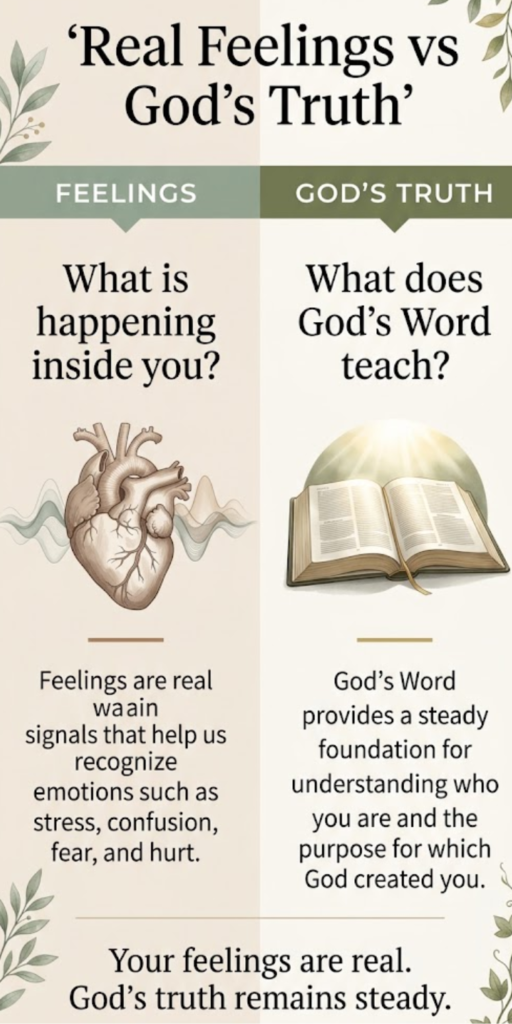
Your feelings can shift from one day to the next, and even from one hour to the next. God’s Word stays the same, which makes it a steady place to stand when your emotions feel unsteady. When doubts and feelings pull you in different directions, learning how to strengthen your faith when you doubt can help you hold on to what is true.
“The Truth Will Set You Free” (John 8:32, 36)
Ken’s Bible study includes a powerful promise from Jesus about truth and freedom. It shows that the answer to confusing feelings is not just a set of rules but a Person.
Jesus Is the Truth (John 14:6)
Jesus said, “I am the way, and the truth, and the life. No one comes to the Father except through me” (John 14:6, ESV). Truth is not only an idea or a feeling you have to figure out on your own. It is found in Jesus Himself, and He invites you to know Him personally.
Freedom Comes From Knowing Jesus (John 8:32, 36)

Jesus promised, “and you will know the truth, and the truth will set you free,” and He added, “So if the Son sets you free, you will be free indeed” (John 8:32, 36, ESV). As the NGEN study explains, the key to freedom is to know Jesus. That freedom grows as you walk with Him every day, which is why you need God in your daily life and not only when life feels hard.
Confession Opens the Door to Freedom (1 John 1:9)
The Bible also promises, “If we confess our sins, he is faithful and just to forgive us our sins and to cleanse us from all unrighteousness” (1 John 1:9, ESV). The NGEN study encourages anyone who feels trapped to ask God to show them the truth, give them His power to break free, and fix their heart and mind. God doesn’t just forgive; He cleanses, so sin no longer controls you.
When Your Feelings and God’s Word Don’t Match
Sometimes you can believe what God says and still feel the opposite. That gap can be confusing, but it does not mean your faith has failed.
Why Do I Still Feel This Way?
Ken’s pastor explained that God never intended anyone to feel this kind of mismatch. Sin turned the whole world upside down, and its effects reach our minds and bodies too. You can read more about why you may feel so different and how Jesus came to heal our minds and, eventually, our bodies.
Give God Time to Work
Accepting Jesus begins a new life, but healing is often a process rather than a single moment. Some people still feel a mismatch or a same-sex attraction after they believe, and that does not mean God has given up on them. Keep praying, keep reading His Word, and watch for the signs you need a deeper relationship with God, because growing closer to Him is how lasting change takes root.
Pray Honestly, Even When Feelings Are Loud
You do not have to hide your feelings from God or pretend they are gone. Before he answered Ken, the pastor breathed a silent prayer for wisdom, and you can pray the same way when you feel overwhelmed. Tell God exactly how you feel, and then ask for His strength with the words from Ken’s Bible study: “Lord, I can’t change myself, but I believe you can.”
Who Can You Talk To?
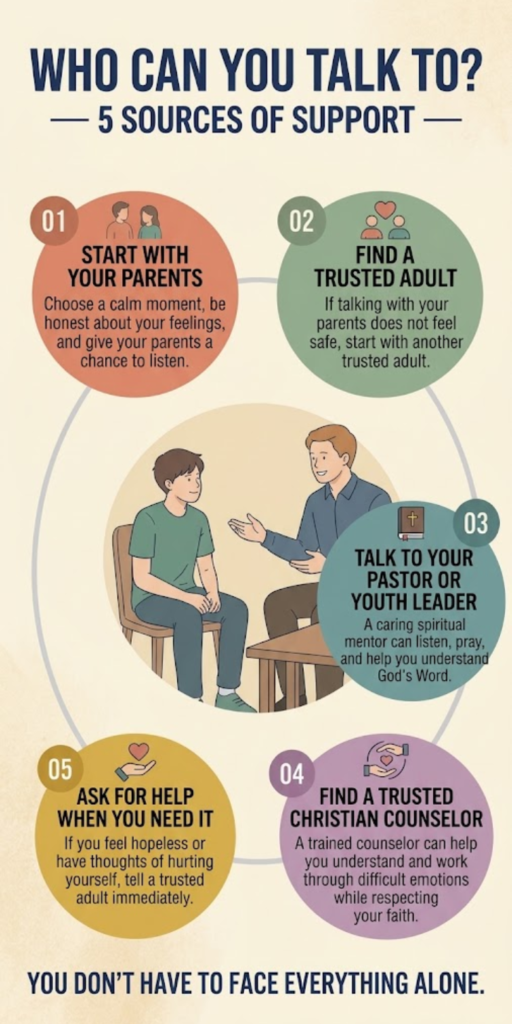
Ken first shared his feelings with a friend at school, who suggested surgery as the answer. Then he talked with his pastor, who listened, prayed, and pointed him to God’s truth, which shows how much it matters who you talk to.
Start With Your Parents
Your parents may not have every answer, but they love you and want to walk with you through hard seasons. Choose a calm moment, be honest about how you feel, and give them a chance to listen. If talking with your parents does not feel safe, start with another trusted adult instead.
Reach Out to Your Pastor or Youth Leader
Ken’s pastor is a good example of what a spiritual mentor can do. He did not rush Ken, judge him, or ignore his pain; instead, he listened, prayed, and shared God’s Word with care. A pastor or youth leader can help you sort through your questions and pray with you along the way.
Find a Trusted Christian Counselor
Feelings of anxiety or depression, like the ones Ken described, are worth talking through with a trained Christian counselor. A counselor can help you understand your emotions while honoring your faith. If you ever feel hopeless or have thoughts of hurting yourself, tell a trusted adult right away, or call or text 988 to reach the Suicide & Crisis Lifeline in the U.S.
Frequently Asked Questions
Are my feelings real if they don’t match God’s design?
Yes. As Ken’s pastor said, your feelings are real, and no one can read your mind or discount what you feel. At the same time, feelings describe your experience, while God’s Word describes the truth about who you are and why He made you.
Should I trust my feelings or God’s Word?
Your feelings are worth listening to, but you can build your life on God’s Word. Feelings change, while God’s truth stays the same. When the two do not agree, bring your feelings to God and let His Word guide your choices.
If I feel trapped and want to be free, what should I do?
The NGEN Bible Study Journal points to John 8:32, 36, and 1 John 1:9. Ask God to show you the truth, give you His power to break free, and fix your heart and mind. Confess anything outside His will, trust Him to forgive and cleanse you, and stay close to people who will support you along the way.
What if I still feel a mismatch after accepting Jesus?
Keep following Jesus and do not give up. Healing is often a process, and lingering feelings do not cancel your faith or God’s love for you. Keep praying, stay in God’s Word, and talk regularly with a pastor, parent, or Christian counselor who can walk with you.
Is it normal to feel like my body doesn’t belong to me while growing up?
Yes, it can be. Ken’s pastor explained that during the teen years, your body and mind change almost every day, and feeling like your body no longer belongs to you can be a natural part of growth. Give yourself time and talk with someone you trust about what you are experiencing.
Final Thoughts: Real Feelings, Unchanging Truth
So, are my feelings real? Yes, they are, and God cares about every one of them, even the ones that confuse or scare you. But your feelings are not the final word on who you are, because God’s truth stays steady when emotions do not.
Like Ken, you can bring your questions into the open, lean on the people who love you, and let Jesus lead you into real freedom. The truth will set you free, and you will find that truth in Him. Take one honest step toward Him today, and let Him meet you right where you are.