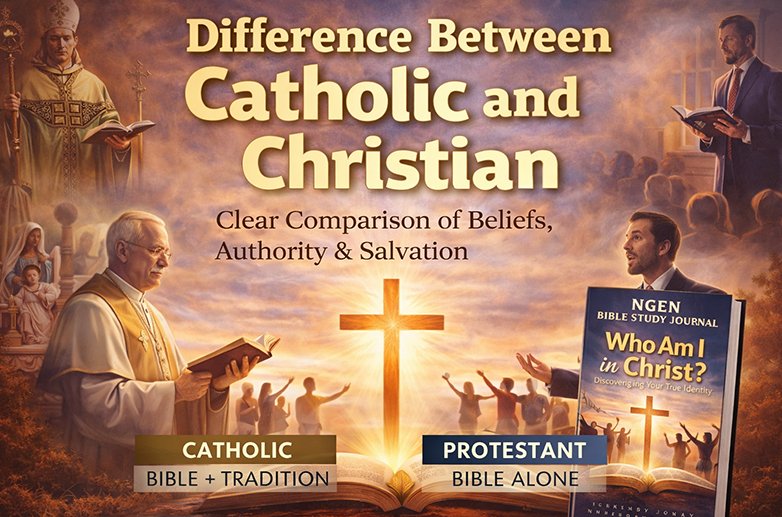
Catholicism and Christianity are terms often used interchangeably, but they encompass distinct beliefs, practices, and interpretations of Scripture. Understanding the difference between Catholic and Baptist or what is the difference between a Catholic and a Baptist can help clarify their theological foundations and religious practices. This blog will provide an in-depth look at the differences between the Catholic and Protestant church, particularly focusing on authority, salvation, and core beliefs.
Quick Summary (Short Answer)
At the core, Catholicism is a branch of Christianity. All Catholics are Christians, but not all Christians are Catholics. The main differences between Catholics and other Christians revolve around the authority of the Church, the role of tradition, and how salvation is attained. Catholics emphasize the importance of both the Bible and church traditions, while many Protestant denominations hold to sola scriptura (Scripture alone). Catholics also place a significant emphasis on the sacraments, including the Eucharist, and the authority of the Pope.
Are Catholics Christians?
Yes, Catholics are Christians. Roman Catholics believe in Jesus Christ as the Son of God, just like other Christians. Catholicism is one of the largest branches of Christianity, and while there are some theological differences, Catholics are, in fact, Christians.
Why Many People Think They Are Different
The perception that Catholics are not Christians often arises from misunderstandings about church authority, the role of tradition, and practices like the veneration of saints and the Eucharist. These practices are not shared by all Christian denominations, which is why some people may believe there is a significant difference.
What Does “Christian” Mean?
The term Christian refers to anyone who follows the teachings of Jesus Christ. Christianity, as a broad religious tradition, includes many denominations that interpret Scripture and doctrine in various ways. Despite these differences, all Christians share the belief in Jesus Christ as Lord and Savior.
Definition of a Christian
A Christian is someone who believes in the life, teachings, death, and resurrection of Jesus Christ. Christians believe that Jesus is the Son of God and the Savior of humanity, who offers eternal life through faith in Him.
Where Catholicism Fits Within Christianity
Catholicism is one of the largest branches of Christianity. It is based on the teachings of Jesus Christ and emphasizes the authority of the Pope, the importance of tradition, and the seven sacraments. The Catholic Church is a global organization that traces its origins to St. Peter, whom Catholics believe was appointed by Christ as the first Pope.
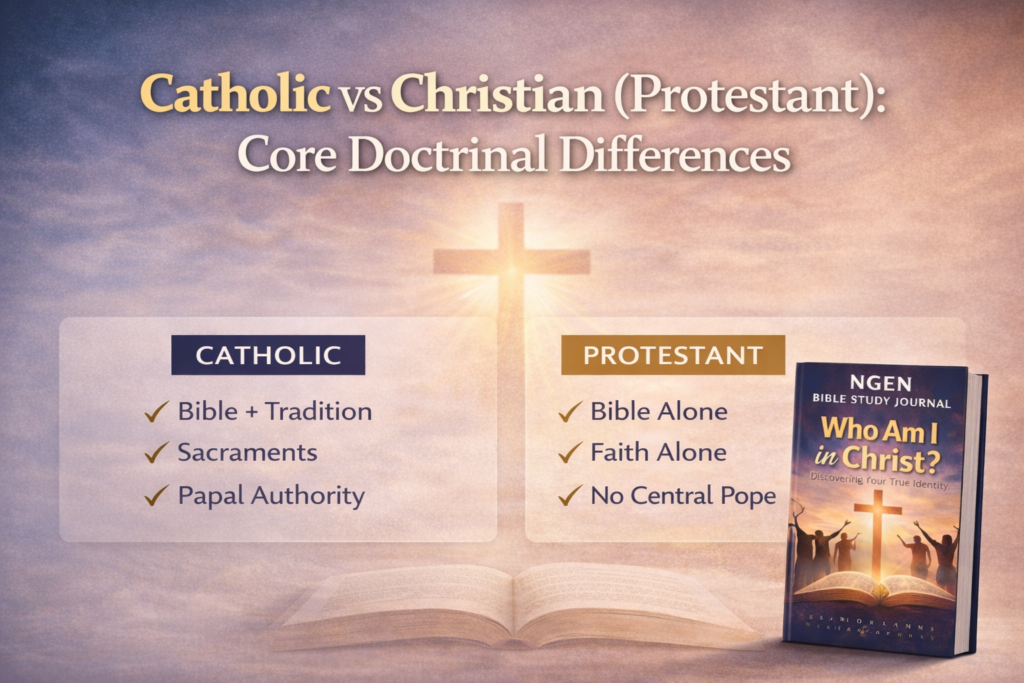
Catholic vs Christian (Protestant) – Core Differences
While all Catholics are Christians, there are distinct differences between Catholic and Protestant Christians. These differences stem from various theological, doctrinal, and historical reasons.
1. Authority – Bible Alone Vs Bible + Tradition
Protestants typically follow the doctrine of sola scriptura, meaning “Scripture alone.” This means that the Bible is the ultimate authority in Christian life and doctrine. In contrast, Catholics believe in the dual authority of Scripture and Tradition. The Church’s traditions, including teachings passed down through the centuries, are also considered authoritative alongside the Bible.
2. Church Leadership – Role of the Pope
One of the most noticeable differences between Catholicism and Protestantism is the role of the Pope. Catholics believe the Pope is the spiritual leader of the Church, the Vicar of Christ, and the successor of St. Peter, who was entrusted with the leadership of the Christian Church by Jesus. Protestants, on the other hand, reject papal authority and do not believe in a central figure of leadership like the Pope.
3. Salvation – Faith Alone Vs Faith Working Through Love
In many Protestant denominations, salvation is by faith alone (sola fide). Protestants believe that salvation is a free gift from God and cannot be earned through works. Catholics, however, believe that salvation involves both faith and works, emphasizing that faith must be expressed through love and good deeds.
4. Confession – Directly to God or Through a Priest?
Protestants believe in direct access to God and that individuals can confess their sins to God without the need for an intermediary. Catholics, however, believe in the sacrament of confession, where a person confesses their sins to a priest, who acts as a mediator between the individual and God.
5. The Eucharist – Symbolic or Real Presence?
Catholics believe in the real presence of Christ in the Eucharist, meaning that during Mass, the bread and wine become the body and blood of Christ. Protestants generally believe that the Eucharist is symbolic, representing Christ’s body and blood, but not physically transforming into it.
6. Mary – Honored or Worshiped?
Catholics hold a special veneration for Mary, the mother of Jesus, and other saints. Catholics do not worship Mary, but they honor her as the Mother of the Church and a model of Christian faith. Protestants do not practice veneration of Mary in the same way, often focusing solely on Christ.
7. Saints – Why Catholics Pray for Intercession
Catholics believe that saints can intercede on behalf of individuals and that prayers to saints are valid. Saints are seen as models of holiness and, through their relationship with God, can pray for others. Most Protestant denominations reject the idea of praying to saints, emphasizing direct prayer to God alone.
8. Sacraments – Why Catholics Have Seven
Catholics recognize seven sacraments—Baptism, Eucharist, Confirmation, Penance, Anointing of the Sick, Holy Orders, and Matrimony—as necessary for spiritual growth. Protestants typically recognize only two sacraments—Baptism and Eucharist—as instituted by Christ in the Bible.
9. Baptism – Infant Vs Believer’s Baptism
Catholics practice infant baptism, believing that baptism is essential for salvation and that infants should be baptized to cleanse them from original sin. Many Protestant denominations practice believer’s baptism, where individuals are baptized once they are old enough to make a personal decision to follow Christ.
10. Afterlife – Heaven, Purgatory & Judgment
Catholics believe in Purgatory, a temporary state of purification before entering heaven. Protestants generally reject the idea of Purgatory and emphasize the immediate judgment of souls upon death, leading to either heaven or hell.
Similarities Between Catholics and Other Christians
Despite the theological differences, there are several shared beliefs between Catholics and other Christians.
Belief in Jesus Christ as Savior
Both Catholics and other Christians believe that Jesus Christ is the Son of God and the Savior of humanity. His death and resurrection are seen as central to the Christian faith.
The Trinity
Both Catholics and Protestants affirm the doctrine of the Trinity, believing in one God in three persons: Father, Son, and Holy Spirit.
The Bible as Sacred Scripture
Both Catholics and Protestants consider the Bible to be the inspired Word of God. However, Catholics also include additional books in their Bible (the Deuterocanonical books) which are not found in the Protestant Bible.
Belief in Heaven and Hell
Both Catholics and Protestants believe in heaven as a place of eternal communion with God and hell as a place of eternal separation from God for those who reject Him.
Catholic vs Christian Comparison Table
| Aspect | Catholic | Protestant |
| Authority | Bible + Tradition | Bible Alone |
| Salvation | Faith and Works | Faith Alone |
| Communion | Real Presence | Symbolic Presence |
| Church Structure | Pope and Hierarchy | No central leadership |
| Mary & Saints | Honored, Not Worshiped | No veneration of saints |
| Worship Style | Liturgical | Varied (often informal) |
Frequently Asked Questions
Is Catholicism a Christian Denomination?
Yes, Catholicism is a denomination of Christianity and is the largest Christian denomination in the world.
Do Catholics Worship Mary?
No, Catholics do not worship Mary, but they do honor and venerate her as the mother of Jesus.
Can Catholics Be “Born Again”?
Yes, Catholics believe in being born again through the sacrament of Baptism.
Why Do Protestants Disagree with Catholics?
Protestants and Catholics disagree on issues such as authority, the role of tradition, and how salvation is attained. These theological differences stem from the Reformation in the 16th century.
Can Catholics Go to Heaven?
Catholics believe that salvation is attainable through faith and good works, and that those who die in a state of grace can go to heaven.
Are Catholics and Protestants the Same Religion?
Both Catholics and Protestants are Christians, but they differ in their understanding of church authority, the sacraments, and salvation.
Final Thoughts: Understanding Without Division
Understanding the differences between Catholics and Protestants is important, especially in light of historical divisions. However, these differences should not divide us but rather deepen our understanding of the diversity within the Christian faith.
Whether you identify as Catholic or Protestant, the most important aspect is to deepen your relationship with Jesus Christ. Both Catholics and Protestants are called to love God and love others, and these shared values should unite us.
If you want to explore this deeper, read our full biblical guide on Who Am I in Christ? Discovering Your True Identity